About NEONlite

Everything dealing with English, computer and graphic-design here.

English

Find articles and files about English (education, teaching-learning, linguistics and many more)!

Graphic Design

Interested in graphic-design? Check my graphic stuff here!

Computer

Get games, software and tutorials for your PC here!

Like Us!

Don't forget to "Like" us on Facebook!

Sunday, 9 February 2014

Martin Coles and Rhonda Jenkins (Eds.). Assessing Reading 2: Changing Practice in Classrooms

Reviewed by Arifin
Tulungagung, 9 February 2014


Introduction
This book is the continuation of the previous serie, Assessing Reading 1: Theory and Practice. What in this book? Just simply check on the content bellow.

Contents

Part I - Teachers changing the system

1 Assessing reading: changing practice 

2 Developing an early literacy portfolio for district-wide use 

3 Taking a closer look at reading: a Scottish perspective 

4 Teachers changing the system: alternative assessment of first-graders’ literacy

5 Literacy assessment as part of new standards 

Part II - Linking curriculum and assessment in the classroom

6 Responsive assessment of reading: seeking evidence on reading attainment from students

7 The literacy profile of Maxwell Pogonowski 

8 Assessing older students’ response to fiction: classroom-based activity to support system-wide assessment

9 Reading while writing: an approach to the assessment of reading through discussions of the drafting process

10 Assessing literacy and special needs in secondary schools: 171 a case for new paradigms

FIGURES
- Chronology: early literacy portfolio
- Schedule for collection of portfolio entries
- Highlights of the six-point early literacy scale
- New Standards grade level 4: reading descriptors
- New Standards grade level 4: writing descriptors
- English Language assessment
- English Language arts portfolio field trial middle school sample entry slips
- Portfolio scores (middle and high school design)
- Wider reading interview: list of possible prompts
- Reading bands C, D, E and F. The American literacy profile scales
- Reading profile rocket—Max
- Reading band F. The American literacy profile scales

Read More
Read the full PDF book? Download here!

Colin Harrison and Terry Saliger (Ed.). Assessing Reading 1: Theory and Practice

Reviewed by Arifin
Tulungagung, 9 February 2014


Introduction
By: Colin Harrison and Terry Saliger
The scope of the book is broad. Chapters such as those by Harrison, Bailey and Dewar, by Pearson, DeStefano and García, and by Alvermann and Commeyras offer new perspectives on the theories that underlie the development and interpretation of reading assessments. They challenge readers to think about assessment in different ways, to stretch their own paradigms on what aspects of literacy can and should be measured and on how to accomplish this complex goal. For example, Pearson and his colleagues ask what is perhaps the most important question of all: can we really measure reading with these new approaches? Another way of thinking about this question is to wonder what we really are measuring when we think we are assessing students’ interactions with text. Harrison, Bailey and Dewar propose a definition of ‘responsive assessment’ and offer guidelines for this approach that then reappear in numerous other chapters. Alvermann and Commeyras draw upon feminist theory as they ponder new paradigms
for reading assessment. 


Issues of national assessment are considered next. Chapters by Brock, by Horner and by Salinger and Campbell demonstrate the challenges inherent in developing large scale national assessments. Whether or not they are tied to a mandated national curriculum, tests designed to provide a ‘nation’s report card’ take many different forms. These tests are often contentious, always closely scrutinized, and are generally highly politicized. The chapters by Brooks and Vincent aim to problematize the issues surrounding national assessments and to offer opposing views on test content or measurement theory, raising intelligent questions about the Key Stage assessments discussed by Horner.


Classroom-based assessments are the focus in the final four chapters. Hayward and Spencer discuss efforts in Scotland to develop a nation-wide system of classroom-based diagnostic assessments that encourage teachers to ‘take a closer look’ at students’ literacy development. This metaphor of taking a closer look is echoed in chapters by Falk and by Hoffman. Falk describes how teachers in New York City have successfully implemented a British assessment method, the Primary Language Record, in their efforts to take a closer look at students and to teach reading more effectively. Hoffman reports the initial stages of a project in which teachers in Texas collaborated with university faculty to develop an alternative to standardized testing for young learners, and Salinger describes a study of teachers who had been implementing a similar early literacy assessment system for almost ten years. A clear emphasis on teachers as the appropriate agents of assessment pervades
all these chapters.

Contents
What in this book can be seen from the following chapters.

PART I - Theories and assumptions underpinning reading assessment

1. Responsive reading assessment: is postmodern assessment of reading possible?

2. Ten dilemmas of performance assessment

3. Feminist poststructuralist perspectives on the language of reading assessment: authenticity and performance

PART II - What are the new approaches, and what are they attempting to achieve?

4. Australian perspectives on the assessment of reading: can a national approach to literacy assessment be daring and progressive?

5. Assessing reading in the English National Curriculum

6. The national assessment of reading in the USA

7. New emphasis on old principles: the need for clarity of purpose and of assessment method in national testing and for national monitoring

8. Curriculum-based assessment of reading in England and Wales: a national pilot study

9. Taking a closer look: a Scottish perspective on reading assessment

10. Using direct evidence to assess student progress: how the Primary Language Record supports teaching and learning

11. Challenging the assessment context for literacy instruction in first grade: a collaborative study

12. Consequential validity of an early literacy portfolio: the ‘backwash’ of reform


Index

Also, you can check any figures available in the book.

- Excerpts from the CLAS reading rubric
- Level 4 Reading and Viewing
- English National Curriculum: assessment arrangement
- Aspects of the NAEP Reading Assessment
- NAEP Proficiency Levels for Reading
- Reading Objectives 1970–71 Assessment
- Reading and Literature Objectives 1979–80 Assessment
- 1992 Reading Objectives
- Comparisons between 1993 tests in England and Wales, and Northern Ireland
- Area for exploration: awareness of author’s use of language
- Chronology: early literacy portfolio

- Early literacy scale, version in sixth draft

Conclusion
This book tries to give some reading assessment approach as well as views, both in various ways. Since it uses "international perspectives on reading assessment", in certain cases it may not fit to what you're looking for. But, it's always fine to learn somethin' new, isn't it?

Buku ini memberikan penjelasan terkait berbagai macam pendekatan dalam "reading assesment", serta pemaparan dari berbagai macam sudut pandang. Yang perlu digarisbawahi adalah bahwa buku ini ber-atribut "international perspective on reading assessment", sehingga, dalam beberapa hal, bahasan dalam buku ini mungkin tidak sesuai dengan konteks kita. Tapi, kan tidak ada salahnya belajar sesuatu yang baru. Sebagai tambahan, buku ini sebenarnya satu paket dengan seri ke-2nya, yaitu Assessing Reading 2: Changing Practice in Classrooms by Martin Coles and Rhonda Jenkins (Eds.), yang isinya akan saya share di postingan selanjutnya.


Read More
Berikut saya sertakan link untuk mendownload versi PDF nya. Selamat belajar.

DOWNLOAD HERE! 

http://liteneon.blogspot.com/

Saturday, 30 November 2013

Rajen Mesthrie (Ed.). The Cambridge Handbook of Sociolinguistics

Reviewed by Zaenal Arifin
Tulungagung, 30 November 2013


Rajen Mesthrie (Ed.). The Cambridge Handbook of Sociolinguistics


All stuffs about sociolinguistics are in. The most comprehensive overview available, this handbook is an essential guide to sociolinguistics today. Reflecting the breadth of research in the field, it surveys a wide range of topics and approaches in the study of language variation and use in society.

As well as linguistic perspectives, the handbook includes insights from anthropology, social psychology, the study of discourse and power, conversation analysis, theories of style and styling, language contact, and applied sociolinguistics. Language practices seem to have reached new levels since the communications revolution of the late twentieth century. At the same time, spoken communication is still the main force of language identity, even if social and peer networks of the traditional face-to-face nature are facing stiff competition of the facebook-to-facebook sort. The most authoritative guide to the state of the field, this handbook shows that sociolinguistics provides us – in tandem with other brands of linguistics and the social and natural sciences – with the best tools for understanding our unfolding evolution as social beings.

Big book, with more than 500 pages. I, myself, have 3 points of the goodness of this book. First, recent book, 2011. Second, wide range of sociolinguistic topics discussion, simply complete. Third, Cambridge-published.

Contents
Part I  Foundations of sociolinguistics
2  Power, social diversity, and language
3  Linguistic anthropology: the study of language as a non-neutral medium 
4  The social psychology of language: a short history
5  Orality and literacy in sociolinguistics
6  Sign languages

Part II  Interaction, style, and discourse
7  Conversation and interaction
8  Pragmatics and discourse
9  The sociolinguistics of style

Part III  Social and regional dialectology
10  Language, social class, and status 
11  Language and region
12  Language and place
13  Language, gender, and sexuality
14  Language and ethnicity

Part IV  Multilingualism and language contact
15 Multilingualism
16 Pidgins and creoles
17 Code-switching
18 Language maintenance, shift, and endangerment
19 Colonization, globalization, and the sociolinguistics of World Englishes

Part V  Applied sociolinguistics
20 Language planning and language policy
21 Sociolinguistics and the law
22 Language and the media
23 Language in education

So, whatever you need about sociolinguistics, find it here.

Download the book here!

Nikolas Coupland. Style: Language Variation and Identity - Download

Reviewed by Zaenal Arifin
Tulungagung, 30 November 2013


Nikolas Coupland. Style: Language Variation and Identity


"Style refers to ways of speaking – how speakers use the resource of language variation to make meaning in social encounters. This book develops a coherent theoretical approach to style in sociolinguistics, illustrated with copious examples. It explains how speakers project different social identities and create different social relationships through their style choices, and how speech-style and social context inter-relate. Style therefore refers to the wide range of stra-tegic actions and performances that speakers engage in, to con-struct themselves and their social lives. Coupland draws on and integrates a wide variety of contemporary sociolinguistic research as well as his own extensive research in this field. The emphasis is on how social meanings are made locally, in specific relationships, genres, groups and cultures, and on studying language variation as part of the analysis of spoken discourse." - Nikolas Coupland.

This book explains and explores any variations of language used by people in their social interaction, that includes some aspects related to the why or how the variations are there.

The book itself is series, from Key Topics in Sociolinguistics by Rajend Mesthrie (Ed.), where there are still other titles, dealing with sociolinguistics, like Politeness by Richard J. Watts, Language Policy by Bernard Spolsky, Discourse by Jan Blommaert, Analyzing Sociolinguistic Variation by Sali A. Tagliamonte and Language and Ethnicity by Carmen Fough.

Contents
Introduction
1.1 Locating ‘style’
1.2 Variationism in sociolinguistics
1.3 Style in sociolinguistics and in stylistics
1.4 Social meaning
1.5 Methods and data for researching sociolinguistic style
1.6 Style in late-modernity
1.7 Later chapters

Style and meaning in sociolinguistic structure
2.1 Stylistic stratification
2.2 Limits of the stratification model for style
2.3 ‘Standard’ and ‘non-standard’
2.4 ‘Non-standard’ speech as ‘deviation’
2.5 Social structure and social practice
3. Style for audiences
3.1 Talking heads versus social interaction 54
3.2 Audience design 58
3.3 Communication accommodation theory
3.4 Some studies of audience design and speech accommodation
3.5 Limits of audience-focused perspectives

Sociolinguistic resources for styling
4.1 Speech repertoires
4.2 The ideological basis of variation
4.3 Habitus and semantic style
4.4 Language attitudes and meanings for variation
4.5 Metalanguage, critical distance and performativity
4.6 Sociolinguistic resources?

Styling social identities
5.1 Social identity, culture and discourse
5.2 Acts of identity
5.3 Identity contextualisation processes
5.4 Framing social class in the travel agency
5.5 Styling place
5.6 Voicing ethnicities
5.7 Indexing gender and sexuality
5.8 Crossing
5.9 Omissions

High performance and identity stylisation
6.1 Theorising high performance
6.2 Stylisation
6.3 Decontextualisation
6.4 Voicing political antagonism – Nye
6.5 Drag and cross-dressing performances
6.6 Exposed dialects

Coda: Style and social reality
7.1 Change within change
7.2 The authentic speaker
7.3 The media(tisa)tion of style

I recommend this book for you who are studying language variations.

Download the book here!

Thursday, 3 October 2013

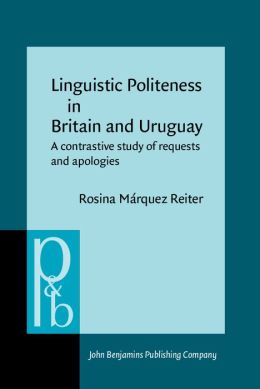
Rosina Marquez Reiter. Linguistic Politeness in Britain and Uruguay: A Contrastive Study of Requests and Apologies - Download


Reviewed by Zaenal Arifin 
Tulungagung, 3 October 2013


Rosina Marquez Reiter. Linguistic Politeness in Britain and Uruguay:  A Contrastive Study of Requests and Apologies

If you are planing or, right now, doing a pragmatic study, especially that dealing with ‘politeness’, more specifically to ‘requests’ and ‘apologies’, then, this book should be a really helpful reference you can use.
What’s Good?
I think this book is really written systematically, and so-academic, and yes, the writer says that this work is based on her academic PhD study. That makes each chapter in this book is so well-organized like original academic writing. For example, the book begins with the explanation of significant theories concerning with the topic: politeness and speech act theory, requests and apologies. On the next chapter, I found ‘Structure of the Study and Methodology’, followed with ‘The Findings: Request’ and The ‘Findings: Apologies’. Then, it is closed with conclusion and appendix.
Reviewing above description, I can imagine how really helpful the book for you in accomplishing your study of pragmatics or linguistic politeness.
Contents
Below is the ‘content’ you can review.
Chapter 1
Politeness theory
1.1 On the history of the term
1.2 Politeness: social or individual entity?
1.3 Perspectives on politeness
1.4 Lakoff’s rules of politeness
1.5 Leech’s Principles and Maxims of Interaction
1.6 Brown and Levinson’s Theory of Politeness
1.6.1 Politeness strategies
1.7 Criticisms of Brown and Levinson’s model
1.7.1 The principle of rationality
1.7.2 Goffman’s notion of ‘face’
1.7.3 The universality of ‘face’
1.7.4 Facework
1.7.5 Concluding remarks

Chapter 2
Speech act theory and politeness: Requests and apologies
2.1 Introduction
2.2 The speech act of requesting
2.2.1 Form and function of requests
2.2.2 Indirect requests
2.3 The speech act of apologising
2.3.1 Form and function of apologies
2.3.2 Concluding remarks

Chapter 3
Structure of the study and methodology
3.1 Introduction
3.2 The structure of the study
3.2.1 Population
3.2.2 The instrument
3.3 The pilot test
3.3.1 The population of the pilot test
3.3.2 The pilot study and the modifications to the instrument
3.4 Data collection and procedure
3.4.1 Recruiting the informants
3.4.2 Other methodologies considered
3.4.3 Data collection
3.4.4 Methodological considerations: from the discourse completion test to the open role-play
3.5 Data analysis: the procedure
3.5.1 Blum-Kulka et al.’s coding scheme for request head acts
3.5.2 The coding scheme: request head acts
3.5.3 The coding scheme: apologies
3.6 Transcription conventions

Chapter 4
The Findings: Requests
4.1 Introduction
4.2 Request strategies
4.2.1 The use of impositives
4.2.2 The use of conventional indirectness
4.2.3 The perspective of conventionally indirect requests
4.2.4 The use of non-conventional indirectness
4.2.5 Divergent situations
4.3 Gender analysis of the main request strategies
4.3.1 Same gender interactions: the case of males
4.3.2 Same gender interactions: the case of females
4.3.3 Cross-gender interactions
4.4 Request modification
4.4.1 External modification
4.4.2 Internal modifications
4.5 Concluding remarks

Chapter 5
The Findings: Apologies
5.1 Introduction
5.2 Apology strategies
5.2.1 Explicit expression of apology
5.2.2 Taking responsibility
5.2.3 Explanation
5.2.4 Offer of repair/restitution
5.2.5 Promise of forbearance
5.3 Situational parameters and explanatory variables
5.4 Gender differences and apologies
5.5 Concluding remarks

Chapter 6
Conclusion
6.1 Introductory remarks
6.2 Requests
6.2.1 The conventional indirectness category
6.3 Apologies
6.4 Some pedagogical considerations
6.5 Implications for further research

Appendix

Rosina Marquez Reiter. Linguistic Politeness in Britain and Uruguay:  A Contrastive Study of Requests and Apologies
Download the book here!
Order the printed book just for IDR 30.000, here at: http://www.facebook.com/arriphyn/.

Judit Sárosdy, et al. Applied Linguistics I for BA Students in English


Reviewed by Zaenal Arifin
Tulungagung, 3 October 2013


Judit Sarosdy, et al. Applied Linguistics I for BA Students in English

Applied Linguistics

The key term that we need to understand before going further discussing this book is ‘applied linguistics’.
 
According to Péter Medgyes the discipline ‘applied linguistics’ has got several interpretations. Some specialists mean language pedagogy by ‘applied linguistics’, while others integrate all new linguistic disciplines such as psycholinguistics, sociolinguistics, pragmatics, and/or computer assisted linguistics into the term.

About this Book

Applied linguistics meant in this book is that from the first definition which deals with language pedagogy. From what I read on it, I myself conclude that this book is originally designed for university students studying English teaching, as also stated in the book that the writers’ aim with the present work is to arouse BA students’ interest in Language Pedagogy and motivate them to become English teachers. They will have plenty of chances to gain deeper knowledge in each area of Applied Linguistics.
Judit and friends, in this book, try to provide wide information about English pedagogy, including various teaching methods, learning process and learning types, classroom managements, exploration of language skills and aspects, course planning, evaluation with its deep explanation,  and others. Take an example about language skills in this book, it begins with the explanation of language teaching models, giving readers understanding about input and output, then developed into the classification of language skills (receptive and productive), plus the exploration of the skills such as why they are important, and some views of sub-skills, like skimming, scaning, interpreting and so on in reading and/or listening skill.

Contents
See the ‘contents’ below for complete description.

FORMER METHODS IN TEACHING ENGLISH
1.1. The Grammar Translation Method
1.2. The Direct Method
1.3. The Audio-Lingual Method
1.4. The Silent Way
1.5. Suggestopedia
1.6. Community Language Learning
1.7. Total Physical Response (TPR)

THE COMMUNICATIVE APPROACH
2.1. Communication
2.2. Characteristics of communicative classes
2.3. Defining Communicative Competence

PARTICIPANTS OF LEARNING PROCESS
3.1. Teacher’s roles, teaching styles
3.1.1. Controller
3.1.2. Organiser
3.1.3. Assessor
3.1.4. Prompter
3.1.5. Participant
3.1.6. Resource
3.2. Learner types
3.2.1. The Age of Learners
3.2.2. Learner differences
3.2.2.1. Neuro-linguistic programming – Revell and Norman (1997)
3.2.2.2. Multiple intelligences theory – Gardner (1983)
3.2.2.3. Learning styles according to Willing (1987)

CLASSROOM MANAGEMENT
4.1. Classroom interaction
4.2. Classroom dynamics
4.3. Classroom arrangement – various work-forms in classes
4.3.1. Whole class grouping (Frontal/Lockstep)
4.3.2. Individualised learning
4.3.3. Pairwork
4.3.4. Groupwork
4.4. Discipline problems
4.4.1. Discipline
4.4.2. Why discipline problems occur
4.4.3. The teacher’s role in maintaining discipline
4.4.3.1. How to prevent disruptive behaviour
4.4.3.2. Dealing with the rising problems
4.4.3.3. When the problem has exploded
4.5. Classroom management techniques
4.5.1. Techniques

LANGUAGE SKILLS
5.1. A language teaching model
5.1.1. Input
5.1.1.1. Roughly-tuned Input
5.1.1.2. Finely-tuned Input
5.1.2. Output
5.1.2.1. Practice output
5.1.2.2. Communication output
5.2. Classification of language skills
5.2.1. Receptive Skills
5.2.1.1. Reasons for reading and listening
5.2.1.2. Sub-skills of Receptive Skills
5.2.1.3. Methodological Principles for Teaching Receptive Skills
5.2.1.3.1. The content of the texts
5.2.1.3.2. Methodological Steps of Developing Receptive Skills
5.2.2. Productive Skills
5.2.2.1. Speaking
5.2.2.2. Writing
5.2.2.3. Translation
5.2.2.4. Interpreting

VOCABULARY
6.1. Selecting Vocabulary
6.2. What does it mean to know a word?
6.3. Active and Passive Vocabulary
6.4. Presenting Vocabulary
6.5. Using dictionaries

GRAMMATICAL STRUCTURES
7.1. The presentation of structures

PRONUNCIATION
8.1. When to teach pronunciation?
8.2. The areas of pronunciation
8.2.1. Individual sounds
8.2.2. Stress
8.2.3. Intonation
8.2.4. Connected speech and fluency
8.3. What materials to use to improve students’ pronunciation?

CULTURE IN TEACHING ENGLISH
9.1. The definition of culture
9.2. The domains of culture
9.3. What culture do we teach?
9.3.1. The importance of teaching achievement culture (‘big C’)
9.3.1.1. The objectives of teaching achievement culture
9.3.2. The importance of teaching behaviour culture (‘small c’)
9.3.3. The concepts belonging to the third area of culture
9.4. Why to teach culture?
9.5. Goals of teaching culture

VISUAL, AUDIO, AUDIO-VISUAL AND DIGITAL AIDS
10.1. Basic principles of using tools in foreign language classes
10.2. Visuals and techniques of visualisation
10.3. Audio resources and ways of audio-production
10.4. Audio-visual means of education and approaches to video-production
10.5. Information and communication technologies

PLANNING
11.1. General principles of course design
11.2. General principles of syllabus design
11.2.1. Planning a syllabus
11.2.2. Types of syllabuses
11.3. Short-term planning – Lesson plans
11.3.1. Pre-planning
11.3.2. The plan
11.3.3. A sample lesson plan

FEEDBACK AND ERROR CORRECTION
12.1. Feedback
12.2. Kinds of feedback
12.3. Error correction
12.4 Errors versus mistakes
12.4.1. Mistakes
12.4.2. Slips and attempts
12.4.3. Performance versus competence
12.4.4. Errors
12.5. Teachers’ attitude to errors
12.5.1. Interlanguage
12.6. What are the most important causes of errors?
12.6.1. Language transfer - interference
12.6.2. Intraference
12.6.3. Overgeneralization
12.6.4. Teaching-induced errors
12.7. Types of errors
12.8. Responding to oral errors
12.8.1. Accuracy
12.8.2. Indication of incorrectness
12.8.3. Ways of correction
12.8.4. Fluency
12.9. Correction of written errors

EVALUATION
13.1. Assessment
13.1.1 Forms of assessment
13.2. Measurement
13.3. Tests
13.4. Criteria of good tests
13.4.1. Validity
13.4.2. Reliability
13.4.2.1. Reliability of scoring
13.5. The relationship of validity and reliability
13.6. The relationship between teaching and testing
13.7. Practicality
13.8. Test types
13.8.1. Aptitude tests
13.8.2. Placement tests
13.8.3. Achievement tests
13.8.4. Progress tests
13.8.5. Diagnostic tests
13.8.6. Proficiency tests
13.8.6.1. Concepts of proficiency
13.9. Tests of grammar and usage
13.9.1. The most common task types (Heaton, 1995)
13.10. Assessing receptive skills (reading and listening
13.10.1. The most widely used task types
13.11. Assessing productive skills (writing and speaking
13.11.1 The most common task types for testing written performance
13.11.2. Scoring productive writing tests
13.11.3. Assessing speaking skills
13.11.4. The most common task types
13.11.5. Scoring speaking tests
13.12. Language examinations in Hungary
13.12.1. Accredited language proficiency examinations

COURSE-BOOK EVALUATION
14.1. The basic principles of course-book evaluation
14.2. Basic steps and types of course-book evaluation
14.3. General characteristics of course-books
14.4. Main criteria for selecting course-books
14.5. Specific criteria to evaluate the content of course-books
14.6. Basic principles for organizing the content

As Reference

This book can be helpful for you if you are on the working of academic papers, especially those dealing the application of various teaching methods and strategies, classroom management, the analysis of students learning styles, improving linguistic skills (listening, reading, speaking and/or writing) and competences (pronunciation, vocabulary, and/or grammar), studying error, or some significant terms in evaluation.
Judit Sarosdy, et al. Applied Linguistics I for BA Students in English

Order the printed book with just IDR 30.000, here: http://www.facebook.com/arriphyn/.